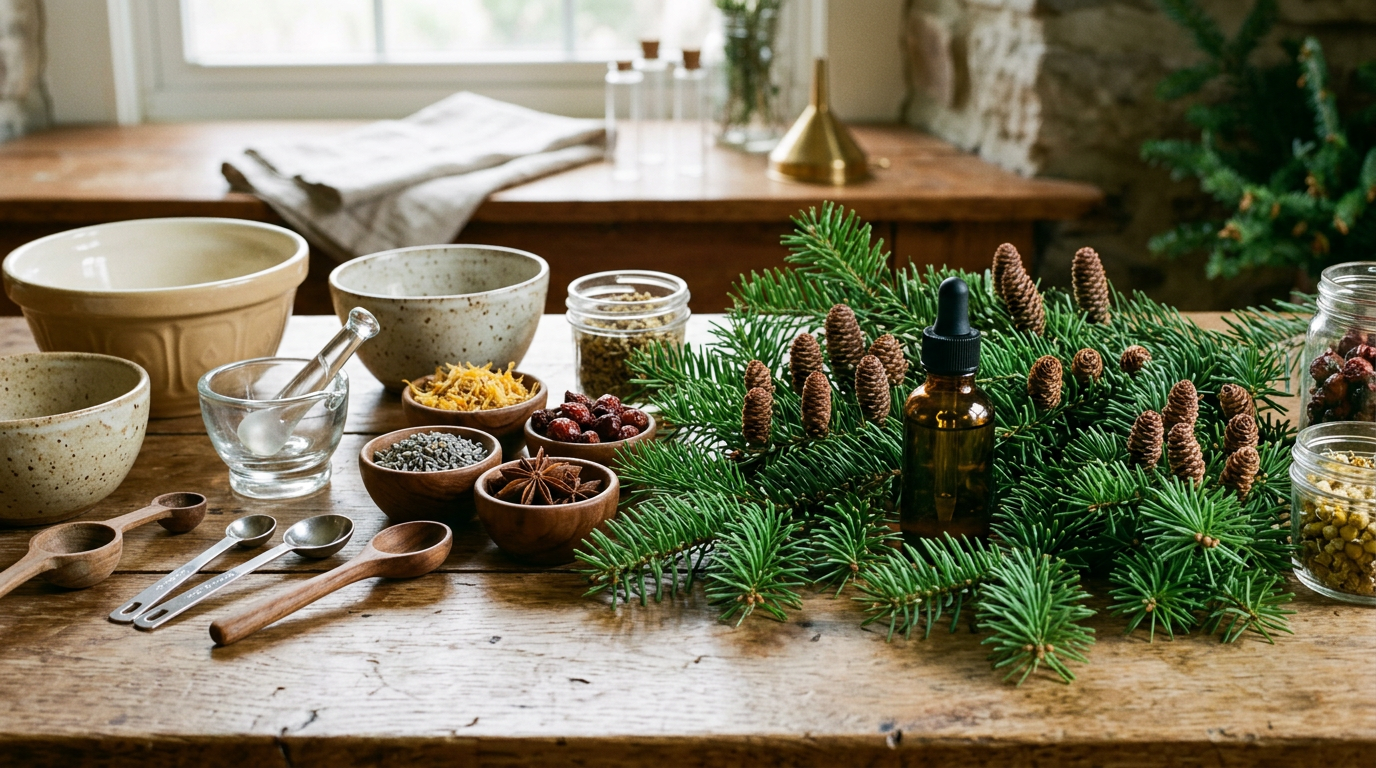
DIY Fir Essential Oil Solid Cologne Bar for Everyday Wear
There's something about the scent of fir that cuts through a crowded fragrance counter. It's green, resinous, a little sweet at the edges, and it doesn't try too hard. If you've been buying solid cologne pucks for $28 a tin and wondering what's actually in them, the answer is usually some combination of wax, butter, oil, and fragrance, which means you can build a better version at your own kitchen counter for a fraction of the cost. This solid cologne bar recipe uses fir essential oil as the backbone note, with a wax and butter base that melts against warm skin and releases scent slowly through the day.

Fir Needle Essential Oil
Our own Fir Needle Essential Oil, in sizes from 0.5 oz to bulk.
From $9.99
Shop Now →This is a beginner-friendly project. No double boiler skills beyond basic melting, no exotic ingredients, and a batch that yields two full tins in under thirty minutes of active time.
What Is a Solid Cologne Bar?
A solid cologne, sometimes called a solid perfume, is a wax-based fragrance you swipe or dab onto pulse points instead of spraying. The base is typically beeswax or a plant wax combined with a butter or carrier oil, melted together and scented with essential oil before it sets. Because there's no alcohol or water, the scent sits closer to the skin and tends to last through several hours of wear without needing a reapplication. It's also travel-friendly since there's no liquid to spill or confiscate at airport security.
For anyone searching for a diy solid cologne fir essential oil project, this format is a good entry point. The ratios are forgiving, the tools are minimal, and mistakes are easy to fix by simply remelting the batch.
Why Fir Essential Oil Works So Well in a Solid Cologne
Fir essential oil, whether Siberian, balsam, or Douglas fir, brings a crisp, forest-floor character that reads as unmistakably masculine-leaning without being one-note. It sits in the same olfactory family as pine and cedarwood but tends to be brighter and less resinous-heavy, which makes it easier to layer. In a solid cologne, fir pairs naturally with the slight sweetness of beeswax and the creaminess of shea butter, rounding out into something that smells more like a walk through a winter forest than a bottle of cleaning product.
Because it's a top-to-middle note, fir on its own will fade faster than a true base note. That's why most fir essential oil cologne recipes, including this one, add a small amount of a deeper, slower-evaporating oil like cedarwood or patchouli to anchor the scent and stretch its wear time.
Difficulty and Prep Time
- Difficulty: Beginner
- Active prep time: 15 to 20 minutes
- Cooling and setting time: 1 to 2 hours
- Yield: Two 1 oz tins (approximately 4 oz total)
Ingredients
This natural cologne bar recipe uses a simple three-part base: wax for structure, butter for glide, and oil for softness. Measurements are by volume for accessibility, though a kitchen scale will give more consistent results if you have one.
- 1 oz (about 2 tablespoons, packed) beeswax pellets, or candelilla wax for a vegan version
- 1 oz (about 2 tablespoons) shea butter or cocoa butter
- 1 tablespoon jojoba oil or sweet almond oil
- 1 teaspoon fractionated coconut oil (optional, for a softer finish)
- 20 to 25 drops fir essential oil
- 5 to 8 drops cedarwood essential oil (to help the scent hold longer)
- Two empty 1 oz metal tins or small glass jars with lids
This ratio lands the finished solid perfume fir oil blend at roughly 3 to 4 percent essential oil dilution, which is on the higher end appropriate for a leave-on product applied only to small areas like the wrists and neck, not for broad body application. If you have sensitive skin, start at the lower end of the drop range and adjust upward in future batches once you know how your skin responds.
Equipment
- A small heatproof glass measuring cup or a double boiler setup
- A saucepan (if using the double boiler method)
- A silicone spatula or wooden stir stick
- A digital kitchen scale (optional but recommended)
- Labels for your finished tins
Step-by-Step Instructions
- Set up a double boiler. Fill a saucepan with about an inch of water and bring it to a low simmer. Place your heatproof measuring cup or a small glass bowl on top, making sure the bottom doesn't touch the water directly.
- Melt the wax. Add the beeswax pellets to the cup and let them melt fully, stirring occasionally. This usually takes 4 to 6 minutes depending on your heat level.
- Add the butter. Once the wax is fully liquid, stir in the shea butter or cocoa butter. Continue stirring until it melts smoothly into the wax with no lumps.
- Stir in the carrier oils. Remove the mixture from heat and stir in the jojoba oil and fractionated coconut oil if using. The mixture should look glossy and fully combined.
- Cool slightly before adding essential oil. Let the mixture sit for about 2 minutes off the heat. Adding essential oil to a mixture that's too hot can cause some of the more volatile scent compounds to evaporate before the bar even sets, which weakens the final fragrance.
- Add the fir and cedarwood essential oil. Stir in the fir essential oil and cedarwood essential oil, mixing thoroughly for about 30 seconds to distribute the scent evenly through the base.
- Pour into tins. Carefully pour the warm liquid into your prepared tins, filling to just below the rim to leave room for the lid to close without pressing into the surface.
- Let it set. Leave the tins undisturbed at room temperature for 1 to 2 hours, or speed things up by refrigerating for 20 to 30 minutes. The bar is ready when it's firm and no longer glossy on top.
- Label and store. Once fully set, add the lid and label each tin with the contents and the date you made it.
A quick test for readiness: press a fingertip gently into the surface. If it leaves an indent that doesn't spring back, give it another 30 minutes before closing the lid.
Safety Warnings and Patch Testing
Essential oils are concentrated plant extracts, and fir essential oil is no exception. A few precautions matter here:
- Always dilute. Never apply fir essential oil directly to skin without diluting it in a carrier oil or wax base first. The ratios in this recipe are designed to keep the finished bar within a reasonable range for point application, not for use as an all-over body product.
- Patch test before full use. Apply a small amount of the finished solid cologne to the inside of your forearm and wait 24 to 48 hours before using it on your neck or wrists. Discontinue use if you notice redness, itching, or irritation at the application site.
- Keep away from broken or sensitive skin, the eye area, and mucous membranes.
- Pregnant or nursing individuals, and anyone with a known sensitivity to conifer oils, should consult a qualified healthcare provider before using fir essential oil in any personal care product.
- Keep out of reach of children and pets. Essential oils in concentrated or semi-concentrated form are not meant for ingestion.
- Store away from open flame or high heat, since the wax and butter base is flammable in its melted, oil-based form.
This recipe is intended for cosmetic and aromatic use only. This information should not replace guidance from a qualified healthcare provider for any personal health question.
Storage and Shelf Life
Stored in a cool, dry place away from direct sunlight, a beeswax and shea butter solid cologne bar will typically hold its scent and texture for 6 to 12 months. Heat is the main enemy here: leaving a tin in a hot car or on a sunny windowsill will soften or melt the base and can shorten how long the fragrance lasts. Keep the lid closed between uses to slow down evaporation of the essential oil, which is the first thing to fade even before the wax base changes texture.
If your bar develops a grainy texture or the surface starts to look dull and separated, it's still generally fine to use, though you can remelt the whole batch and re-pour it for a fresher finish.
Variations and Substitutions
Once you've made the base recipe once, it's easy to adjust for your own preferences or what you have on hand.
Vegan Version
Swap the beeswax for candelilla wax at the same measurement. Candelilla is firmer than beeswax, so you may want to add an extra half teaspoon of carrier oil to keep the finished bar from feeling too hard against skin.
Deeper, Woodsier Blend
Replace the cedarwood with 5 drops of vetiver or 5 drops of sandalwood for a more grounded, base-heavy scent profile that leans further from the forest and closer to a traditional woody cologne.
Brighter, Fresher Blend
Add 3 to 5 drops of bergamot or sweet orange essential oil for lift at the top of the scent. Note that bergamot in particular can increase skin sensitivity to sunlight, so if you add it, plan to apply this cologne to areas that won't see direct sun exposure, and mention this consideration during your patch test window.
Butter Swaps
Cocoa butter will add a faint chocolate undertone that can complement fir surprisingly well. Mango butter is a lighter option if you want less scent interference from the base itself.
Tin-Free Option
No metal tins on hand? Small glass jam jars or repurposed lip balm tins work just as well. Anything with a snug lid that keeps air out will do the job.
A Note on Sourcing Your Fir Essential Oil
The quality of the fir essential oil you use will show up directly in the finished product. Look for oils that list the botanical species (Abies sibirica, Abies balsamea, or Pseudotsuga menziesii, depending on the type of fir) and the country or region of origin. An oil that's been sitting on a shelf for years, or one priced far below market average, is more likely to have lost some of its brightness or to be cut with synthetic fragrance. For a project like this, where the fir is doing most of the scent work, starting with a well-sourced oil makes a real difference in how the final bar smells on day one and on day sixty.
Final Thoughts
A solid cologne bar is one of the more forgiving DIY projects out there. If your first batch turns out too soft, you can remelt it and add more wax. Too hard, add more oil. Scent too faint, increase the essential oil slightly on your next round, staying within safe dilution ranges. Once you've got a base ratio you like, this natural cologne bar recipe becomes something you can make in batches, gift in small tins, or simply keep in your bag as a low-fuss alternative to a bottle of spray fragrance.