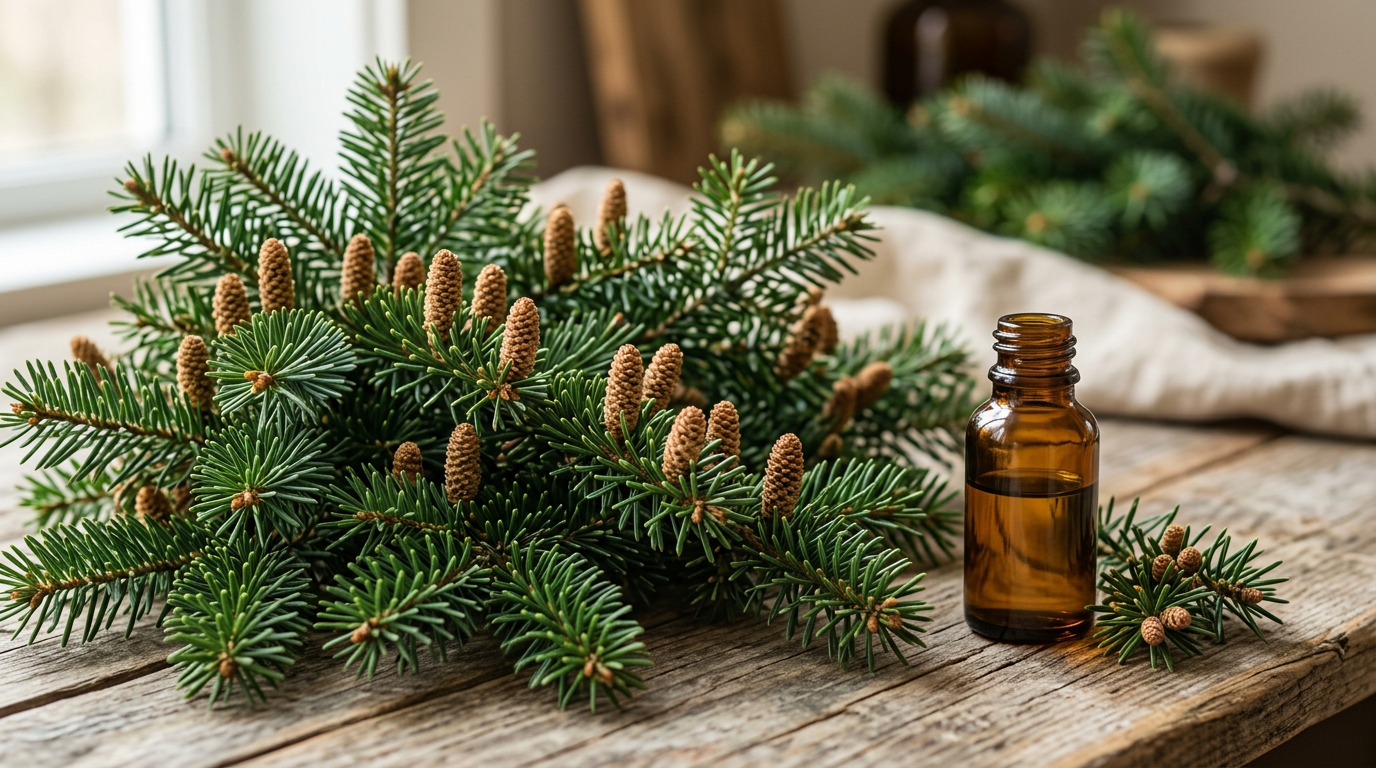
How to Scent a Home Sauna With Fir Essential Oil
There's a reason fir shows up in sauna culture from Scandinavia to the Pacific Northwest. The scent is resinous and cool at once, a little sweet, a little green, and it holds up beautifully in heat and steam. If you've only ever smelled fir oil cold, straight from the bottle, you're missing the best version of it. Heat opens the oil up. Steam carries it. A home sauna is arguably the ideal place to actually experience what fir essential oil can do in a room.

Fir Needle Essential Oil
Our own Fir Needle Essential Oil, in sizes from 0.5 oz to bulk.
From $9.99
Shop Now →This guide walks through exactly how to bring fir essential oil into a home sauna session: what to buy, how much to use, where it goes, and the small mistakes that turn a good session into a headache-inducing one (usually from using far too much oil, not too little).
Why Fir Oil Works So Well in a Sauna Setting
Fir essential oil is steam-distilled from the needles (and sometimes twigs) of fir trees like Siberian fir, balsam fir, or Douglas fir. That production method matters here: fir oil is already accustomed to steam. When it hits the hot air of a sauna, the lighter aromatic compounds volatilize quickly, filling the room with what most people describe as a crisp, cold-forest smell, something between a Christmas tree and a walk after rain.
Compared to something like lavender or citrus, fir oil tends to read as more grounding and less sweet in a hot, enclosed space. A lot of home sauna owners land on it specifically because it doesn't turn cloying once the room is at full heat, the way some floral oils can.
Materials You'll Need
- Pure fir essential oil (Siberian fir, balsam fir, or Douglas fir all work well; check that the label says 100% essential oil, not a fragrance blend)
- A wooden or stainless steel ladle dedicated to sauna water (don't reuse a kitchen ladle)
- A heat-safe bucket or basin for mixing your löyly water
- Filtered or distilled water (tap water is fine in most areas, but mineral-heavy water can leave residue on hot rocks over time)
- A small glass dropper bottle or measuring spoon for accurate dosing
- Optional: an unscented carrier like a splash of grain alcohol or witch hazel, which helps the essential oil disperse evenly through water instead of pooling on the surface
- A sauna-safe diffuser puck or wooden reed if you'd rather not add oil directly to the rocks
Skip synthetic "sauna fragrance" products that list undisclosed "parfum" or fragrance oil on the label. They're built for scent throw, not for burning cleanly, and residue from lower-quality oils can build up on hot rocks and heating elements over repeated sessions.
Step-by-Step: How to Use Fir Oil in a Sauna
Step 1: Choose Your Delivery Method
There are three common ways people bring fir essential oil into a sauna session, and each has tradeoffs:
- Scented löyly water (the classic method): a few drops of fir oil diluted into the water you ladle over the hot rocks. This is the most traditional approach in wood-fired and electric saunas alike.
- Diffuser puck or reed placed near, not on, the heater: a slower, steadier release that avoids any direct contact between oil and hot rocks.
- Pre-scented sauna towel or robe: a drop or two on a towel outside the sauna, so the scent travels in with you but never touches heat directly. This is the gentlest option and a good starting point if you're new to scenting sauna sessions.
For most home sauna owners, scented löyly water is the method of choice because it recreates that classic steam-room burst of scent every time water hits the rocks. That's the method this guide focuses on, but the dilution guidance below applies across all three.
Step 2: Get the Dilution Ratio Right
This is the step people get wrong most often, almost always by using too much oil. Essential oils are concentrated. A little fir oil goes a long way once it's vaporizing in a hot, enclosed room.
A reliable starting ratio for essential oil sauna water is:
3 to 5 drops of fir essential oil per 1 liter (about 4 cups) of water.
If you're using a smaller ladle bucket, say 500ml, cut that down to 2 to 3 drops. You can always add a drop more on your next round. You cannot easily undo an overscented bucket of water in a room with no windows.
If you're adding a carrier like grain alcohol or witch hazel, mix the drops into about a teaspoon of the carrier first, then stir that into your water. This keeps the oil from floating on the surface as a concentrated film and helps it distribute more evenly when it hits the rocks.
Step 3: Mix the Water Just Before Use
Fir oil's lighter aromatic compounds start evaporating as soon as they hit water, especially warm water. Mix your scented löyly water shortly before your session rather than hours in advance, so the scent is at full strength when you actually pour it. If you're prepping ahead of time, keep the bucket covered and in a cool spot.
Step 4: Ladle in Small, Even Amounts
Start your session with unscented water for the first pour or two, letting the sauna come up to its normal steam level. Once the room is hot, ladle the fir-scented water over the rocks in small amounts, roughly a quarter cup at a time, rather than dumping the whole bucket at once.
Small, spaced pours give you repeated bursts of scent throughout the session instead of one overwhelming cloud at the start that fades by the halfway mark. It also gives you a chance to gauge intensity and adjust before you've used your whole batch of water.
Step 5: Position Yourself for the Best Scent Experience
Steam and scent rise and spread unevenly depending on where the heater sits relative to the benches. If you have the option, sit on a mid-level bench rather than directly beside the heater. Too close, and the burst of fir aroma can feel sharp and short-lived; too far, and it may not reach you at all before dissipating.
Step 6: Ventilate Between Rounds
If you're doing multiple rounds (sauna, cool-down, repeat), crack the door or use the sauna's vent between rounds. This clears lingering steam and resets your sense of smell, so the next pour of fir water reads as fresh rather than muddled with the last round's scent.
Step 7: Clean the Ladle and Bucket After Each Session
Essential oil residue can build up on wood and plastic surfaces over time, eventually going rancid or turning sticky. Rinse your ladle and bucket with warm water after each use, and let them air dry fully before storing.
Common Mistakes to Avoid
- Pouring undiluted oil directly onto hot rocks. This isn't scenting, it's flash-vaporizing a concentrated oil in an enclosed space, which can produce an overwhelming, eye-watering cloud rather than a pleasant aroma. Always dilute in water first.
- Using fragrance oil instead of essential oil. Fragrance oils are often synthetic and can behave unpredictably at high heat, sometimes leaving a filmy residue on rocks or heating elements.
- Overloading the water. More drops does not mean more enjoyment past a certain point. Most people find the sweet spot well below what they'd initially guess.
- Scenting a sauna with poor ventilation. A tightly sealed room with no airflow can let scent (and steam) build up to an uncomfortable intensity fast. Make sure your sauna has proper venting before scenting sessions.
- Storing oil-scented water for later use. Pre-mixed water loses potency and can grow cloudy or develop an off smell if left standing for more than a day, even refrigerated.
- Applying oil directly to skin before entering. Fir oil is meant for the air here, not the skin. If you want to wear a scent into the sauna, dilute properly first and do a patch test at least 24 hours beforehand on a small area of skin, watching for any irritation before wider use.
Fir Oil in a Steam Room vs. a Dry Sauna
Worth noting: the steps above are written for a traditional or infrared sauna where you're adding scent to löyly water poured over rocks or a heater. A steam room works a little differently, since the steam itself is generated by a boiler rather than water hitting hot stones.
For fir oil steam room use, most built-in steam generators have a dedicated aromatherapy reservoir or inlet designed for this exact purpose. Check your unit's manual before adding any oil directly, since manufacturers vary on recommended dilution and some require oil blended with a specific carrier to avoid clogging the line. If your steam room doesn't have a built-in reservoir, a diffuser puck placed near (not inside) the steam vent is the safer route.
What to Expect From a Fir-Scented Sauna Session
The most immediate and consistent thing people notice is the atmosphere itself: a crisp, resinous, forest-like aroma that fills the room in waves each time scented water hits the rocks. Many describe the overall feel of a fir-scented session as more grounding and outdoorsy than an unscented one, closer to sitting in a cabin surrounded by evergreens than a plain hot room.
Some sauna-goers report that the scent seems to support a slower, more settled mood during the session, part of building a calming end-of-day ritual around sauna time rather than any specific physical outcome. These are individual, anecdotal impressions rather than established findings, and results vary from person to person. If you're using fir oil as part of a broader wind-down routine, treat it as one small, pleasant piece of that ritual rather than the main event.
If you have respiratory sensitivities, are pregnant, or have any condition that makes heat exposure a concern, check with a qualified healthcare provider before adding sauna sessions or essential oil use to your routine, and before trying any new oil in an enclosed, heated space for the first time.
Quick Reference: Fir Oil Sauna Ratios
| Bucket Size | Fir Oil Drops | Notes |
|---|---|---|
| 500ml (2 cups) | 2 to 3 drops | Good for smaller personal saunas or a first try |
| 1 liter (4 cups) | 3 to 5 drops | Standard starting ratio for most home saunas |
| 2 liters (8 cups) | 6 to 10 drops | For larger multi-person saunas; pour in smaller increments |
Start on the lower end of any range, especially the first time you try a new bottle of fir oil. You can always add more on your next pour. Once fir essential oil is part of your regular sauna routine, you'll get a feel for exactly how many drops suit your space, your heater, and your own preference for how strong you like the scent to build.