Fir Diffuser Blends: 12 Recipes That Smell Like a Snowy Wood
There is a particular quality to the air just after snowfall in a conifer forest. It is cold, sharp, resinous, and deeply still. These fir diffuser blends are built to recreate exactly that atmosphere inside your home, using fir needle essential oil paired with a frankincense variety that is quietly becoming a favorite among blenders: Boswellia serrata, the Indian frankincense.
You will find 12 complete winter diffuser recipes below, each with exact drop counts, milliliter measurements, and notes on why each ingredient earns its place. Before the recipes, a closer look at why serrata frankincense belongs in this collection.
Why Frankincense Serrata Works So Well in Fir Diffuser Blends
Not all frankincense smells the same. Boswellia sacra tends toward bright citrus and smoke. Boswellia carterii leans dry and papery. Boswellia serrata sits in a different register entirely: warmer, softer, and faintly earthy, with a creamy, balsamic undertone that does not compete with fir needle's sharp green bite. It complements it.
Serrata is steam-distilled from the resin of trees growing across the dry forests of India, particularly Madhya Pradesh and Rajasthan. The climate there produces a resin with notably high levels of alpha-pinene and incensole acetate, which gives the oil its characteristic soft warmth. When you layer it beneath silver fir or balsam fir essential oil, the serrata acts almost like a base coat: it rounds out the sharpness, adds depth, and keeps the blend from smelling one-dimensional.
For a broader look at pairing frankincense and conifer oils, the complete forest fragrance blending guide covers the principles in detail.
Before You Start: Diffuser Basics and Safety Notes
All 12 recipes below are formulated for ultrasonic or nebulizing diffusers. Most home diffusers hold 100 ml or 200 ml of water. These recipes are written for a 100 ml tank. If your diffuser holds 200 ml, simply double every measurement.
General Safety Notes
- Keep the room ventilated. Diffuse for 30 to 60 minutes at a time, then allow fresh air to circulate before running another session.
- Keep diffusers out of reach of children and pets. Many essential oils that are pleasant for adults are not appropriate in enclosed spaces shared with cats, dogs, or birds.
- If you are pregnant, nursing, or have a respiratory sensitivity, consult a qualified healthcare provider before using diffuser blends regularly.
- These blends are for aromatic use only. They are not for skin application without proper dilution (see skin dilution notes in the variations section).
- Store unused blended oils in dark glass bottles, capped tightly, away from heat and direct sunlight.
Shelf life note: Pre-mixed essential oil blends stored correctly in a dark amber or cobalt glass bottle typically maintain their aromatic quality for 12 to 24 months. Fir needle oils, especially silver fir, oxidize faster than most. Use within 12 months of opening the source bottle for best results.
The 12 Recipes
Each recipe is written as a blend concentrate. Combine the drops into a 5 ml or 10 ml dark glass bottle, mix gently, and then add the called-for amount to your diffuser's water tank. This approach makes it easy to batch-mix your favorite formulas and use them throughout the season.
Recipe 1: Deep Snow
The simplest blend in the collection. Clean, cold, and almost silent in its mood.
- Silver fir (Abies alba): 6 drops / 0.30 ml
- Frankincense serrata: 3 drops / 0.15 ml
- Cedarwood atlas: 1 drop / 0.05 ml
Add 8 to 10 drops of this concentrate to 100 ml of water.
Recipe 2: Frasier Fir and Smoke
This is where frasier fir diffuser oil takes center stage. The vetiver adds a ghost of wood smoke.
- Frasier fir (or balsam fir): 5 drops / 0.25 ml
- Frankincense serrata: 3 drops / 0.15 ml
- Vetiver: 1 drop / 0.05 ml
- Black spruce: 1 drop / 0.05 ml
Add 8 to 10 drops of concentrate to 100 ml of water.
Recipe 3: Snowy Citrus Morning
Bright but grounded. Good for early winter mornings when you want energy without harshness.
- Silver fir: 4 drops / 0.20 ml
- Frankincense serrata: 2 drops / 0.10 ml
- Wild orange: 3 drops / 0.15 ml
- Cardamom: 1 drop / 0.05 ml
Add 8 to 10 drops of concentrate to 100 ml of water.
Recipe 4: Nordic Cabin
Pine, fir, and a touch of clove. The kind of blend that belongs near a fireplace.
- Scots pine: 4 drops / 0.20 ml
- Balsam fir: 3 drops / 0.15 ml
- Frankincense serrata: 2 drops / 0.10 ml
- Clove bud: 1 drop / 0.05 ml
Add 8 to 10 drops of concentrate to 100 ml of water. Use clove bud sparingly; it is potent.
Recipe 5: Quiet Forest Floor
Earthy and slow. Patchouli anchors the fir without overpowering it.
- Silver fir: 5 drops / 0.25 ml
- Frankincense serrata: 3 drops / 0.15 ml
- Patchouli: 1 drop / 0.05 ml
- Cedarwood virginia: 1 drop / 0.05 ml
Add 8 to 10 drops of concentrate to 100 ml of water.
Recipe 6: Winter Spice Walk
Spiced and warming, without veering into bakery territory. Good for late afternoons.
- Balsam fir: 4 drops / 0.20 ml
- Frankincense serrata: 3 drops / 0.15 ml
- Ginger: 1 drop / 0.05 ml
- Cinnamon bark: 1 drop / 0.05 ml
- Sweet orange: 1 drop / 0.05 ml
Add 8 to 10 drops of concentrate to 100 ml of water. Cinnamon bark is a strong sensitizer in skin applications; for diffuser use, one drop in a blend is appropriate.
Recipe 7: Frasier Fir and Lavender Dusk
One of the quieter blends. Frasier fir diffuser oil and lavender is a well-matched pair for evening wind-down routines.
- Frasier fir: 5 drops / 0.25 ml
- Frankincense serrata: 3 drops / 0.15 ml
- Lavender (fine): 2 drops / 0.10 ml
Add 8 to 10 drops of concentrate to 100 ml of water.
Recipe 8: Blue Ridge Winter
A nod to the Appalachian highlands where frasier fir grows naturally. Smoky, green, and cold.
- Frasier fir: 4 drops / 0.20 ml
- Black spruce: 2 drops / 0.10 ml
- Frankincense serrata: 2 drops / 0.10 ml
- Juniper berry: 2 drops / 0.10 ml
Add 8 to 10 drops of concentrate to 100 ml of water.
Recipe 9: Candlelit Balsam
Warm and slightly sweet. Benzoin resinoid gives this one a soft, vanilla-adjacent quality without tipping into dessert.
- Balsam fir: 5 drops / 0.25 ml
- Frankincense serrata: 3 drops / 0.15 ml
- Benzoin resinoid: 2 drops / 0.10 ml
Add 8 to 10 drops of concentrate to 100 ml of water. Note: benzoin resinoid is thick. Warm the bottle briefly in your hands before measuring.
Recipe 10: Silver and Stone
Minimal and cool. Bergamot lifts the fir into something almost luminous.
- Silver fir: 5 drops / 0.25 ml
- Frankincense serrata: 2 drops / 0.10 ml
- Bergamot (bergapten-free): 3 drops / 0.15 ml
Add 8 to 10 drops of concentrate to 100 ml of water.
Recipe 11: Fir and Myrrh
Two resins and a conifer. This one has a ceremonial quality, deep and unhurried.
- Silver fir: 4 drops / 0.20 ml
- Frankincense serrata: 3 drops / 0.15 ml
- Myrrh: 2 drops / 0.10 ml
- Sandalwood (Australian): 1 drop / 0.05 ml
Add 8 to 10 drops of concentrate to 100 ml of water.
Recipe 12: The Whole Forest
Every layer of a conifer wood in one blend: high canopy, dark bark, cold air, and resin.
- Balsam fir: 3 drops / 0.15 ml
- Black spruce: 2 drops / 0.10 ml
- Scots pine: 2 drops / 0.10 ml
- Frankincense serrata: 2 drops / 0.10 ml
- Cedarwood atlas: 1 drop / 0.05 ml
Add 8 to 10 drops of concentrate to 100 ml of water.
Step-by-Step Blending Instructions
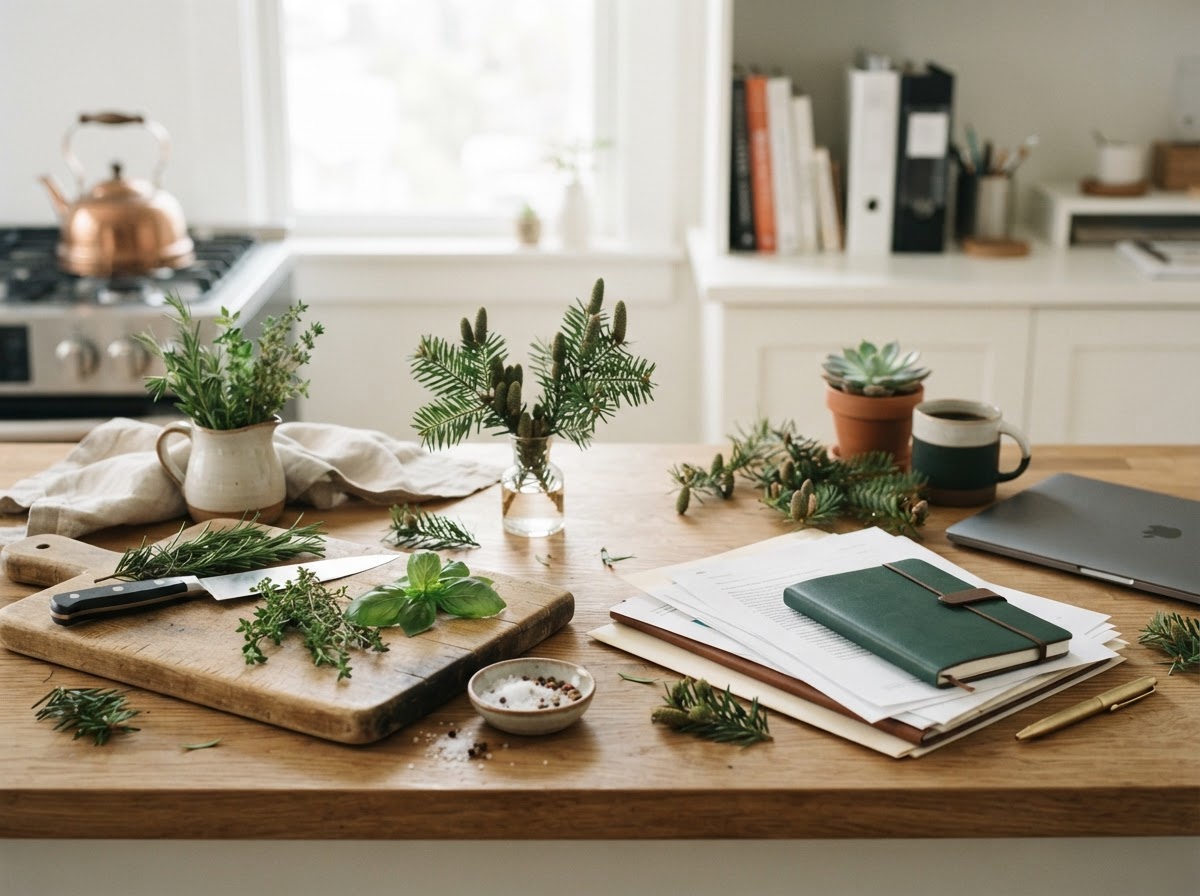
- Gather your materials. You will need your essential oils, a 5 ml or 10 ml dark amber or cobalt glass bottle for the concentrate, a clean dropper or pipette, and a small label.
- Count drops carefully. Work over a clean surface. Hold each bottle vertically and allow drops to fall at a consistent pace. If your oils are thick (benzoin, vetiver, myrrh), warm the bottle in your hands for 30 seconds first.
- Add in order of viscosity. Start with the lightest oils (citrus, fir needle) and finish with the heaviest (resins, vetiver). This prevents the dropper tip from becoming clogged.
- Cap and roll. Once all drops are in, cap the bottle and roll it gently between your palms for 30 seconds. Do not shake. Rolling integrates the oils without introducing unnecessary air.
- Label immediately. Write the recipe name and the date. Essential oil blends are easy to forget, and unlabeled bottles are a source of confusion.
- Rest the blend. Allow the concentrate to sit for at least one hour before using. Some blenders prefer 24 hours. The components have time to marry, and the finished scent is noticeably rounder.
- Add to your diffuser. Fill your diffuser to its water line, then add 8 to 10 drops of concentrate. Run for 30 to 60 minutes.
Variations: Taking These Blends Further
Variation 1: Room Spray
Combine 15 drops of any concentrate above with 1 teaspoon of high-proof alcohol (such as perfumer's alcohol or Everclear) in a 60 ml glass spray bottle. Add distilled water to fill. Shake well before each use. Spritz into the air, not directly onto fabric without testing first, as some oils can mark certain materials.
Variation 2: Personal Inhaler
Cotton wicks for personal aromatherapy inhalers hold 15 to 20 drops of a concentrate. This is a convenient way to enjoy the fir and serrata combination at your desk or while traveling without running a diffuser. For personal inhalers, you are inhaling directly, so limit sessions to a few minutes at a time.
Variation 3: Skincare Dilution (Chest or Pulse Point)
If you want to wear a fir-serrata blend on skin, proper dilution is essential. A 2% dilution is the standard for adults in leave-on applications: that is 12 drops of essential oil per 1 fluid ounce (30 ml) of carrier oil. Always perform a patch test before applying a new blend to a larger area of skin. Apply a small amount to the inner forearm, wait 24 hours, and check for any reaction. If irritation occurs, discontinue use. Do not apply undiluted essential oils directly to skin.
If you enjoy making your own scented products, the guides on capturing the frasier fir scent in a DIY candle and using fir needle oil in cold process soap are natural next steps from these diffuser recipes.
Sourcing and Quality Notes
The quality of your source oils shapes everything. With fir needle especially, the difference between a carefully distilled batch from a well-managed forest and a lower-grade commercial oil is immediately apparent in the diffuser. Look for oils that carry GC/MS (gas chromatography/mass spectrometry) batch reports and clear country-of-origin information.
For frankincense serrata specifically, India is the benchmark origin. Oils from Boswellia serrata trees in Madhya Pradesh tend to carry the warm, balsamic depth that makes this variety so effective as a blending base. If a supplier cannot tell you where their serrata was harvested, that is worth noting.
| Fir Variety | Botanical Name | Aromatic Character | Best Paired With |
|---|---|---|---|
| Silver fir | Abies alba | Sharp, cold, clean green | Serrata, bergamot, cedarwood |
| Balsam fir | Abies balsamea | Sweet, resinous, classic Christmas tree | Serrata, orange, benzoin |
| Frasier fir | Abies fraseri | Fresh, slightly fruity, crisp | Serrata, lavender, juniper |
| Douglas fir | Pseudotsuga menziesii | Citrusy-green, bright | Serrata, lemon, black spruce |
A Few Final Notes on Using These Blends
Twelve recipes is a good starting point, not a finish line. Once you have worked through a few of these winter diffuser recipes and developed a feel for how serrata interacts with fir, you will naturally start adjusting ratios. Maybe you want more vetiver in Recipe 2. Maybe you find that adding a single drop of rose absolute to Recipe 7 takes it somewhere unexpected.
That is the pleasure of blending. The forest has hundreds of layers, and so does your collection of oils.
"The best diffuser blend is the one that makes you stop what you are doing for a moment and just breathe."
Keep your bottles labeled, keep your workspace clean, and keep your serrata on the shelf. It earns its place in almost every one of these recipes.