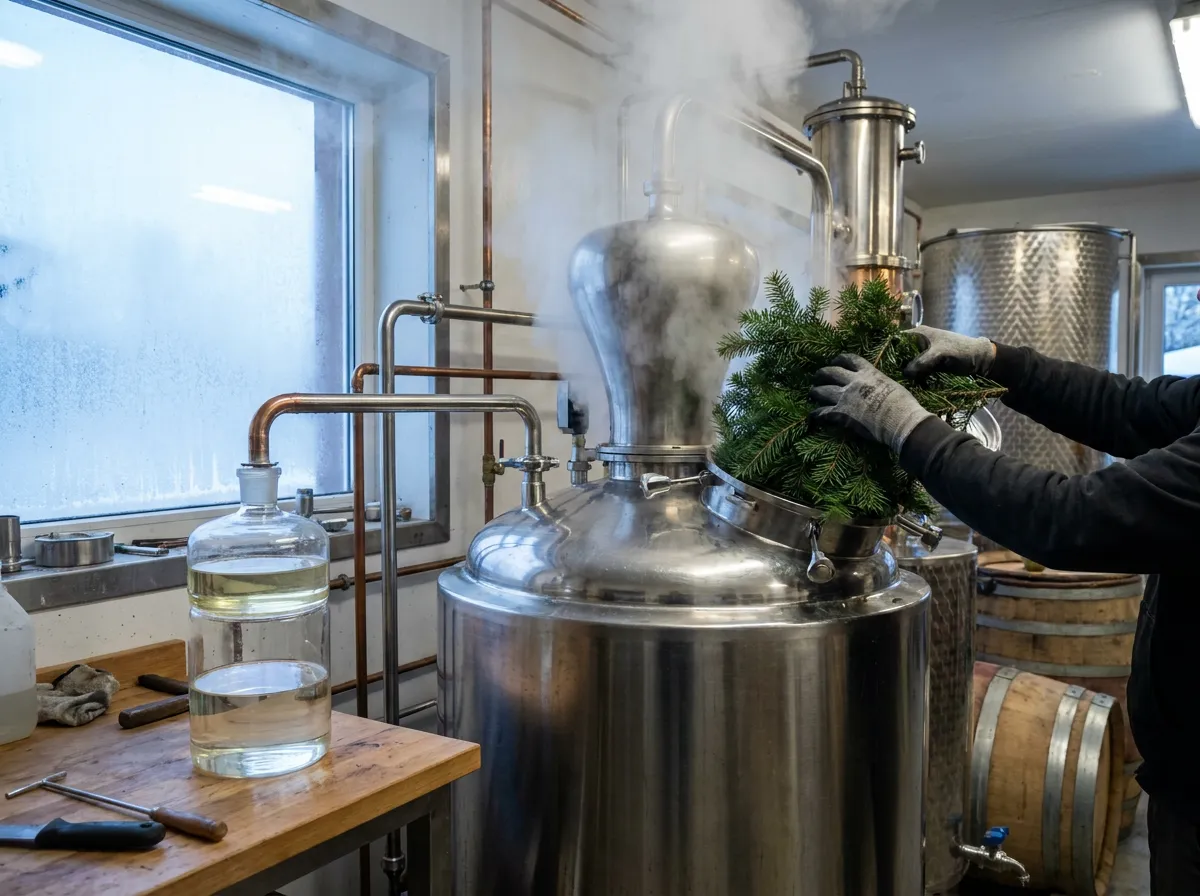
Fir needle oil is a winter crop, and the gap between the cut and the still decides how much of it survives. Ours is short because we run the still.
Cut conifer boughs start losing their brightest aromatics almost immediately, and fir loses more than most.
The sappy, jammy character people love in balsam fir sits in the lightest fraction of the oil, and that fraction is the first to go once the needles are off the tree. A bough that spends a week in transit gives a duller, flatter oil than the same bough distilled the day it was cut.
That is the single reason we do this ourselves rather than buying drums. Our material is boughs from the North American boreal forest, bought in bulk from growers we deal with directly, and distilled close to the harvest.
Every batch goes to an independent laboratory that has no commercial interest in the answer.
The constituent behind balsam fir's sweet, jammy softness, and the clearest marker of the species.
The bright conifer top notes, and a check on how fresh the material was at the charge.
Confirms Abies balsamea rather than spruce, pine or a cheaper Siberian fir sold under the same name.
Send the lot reference and we will return its analysis. The contact page works as well.
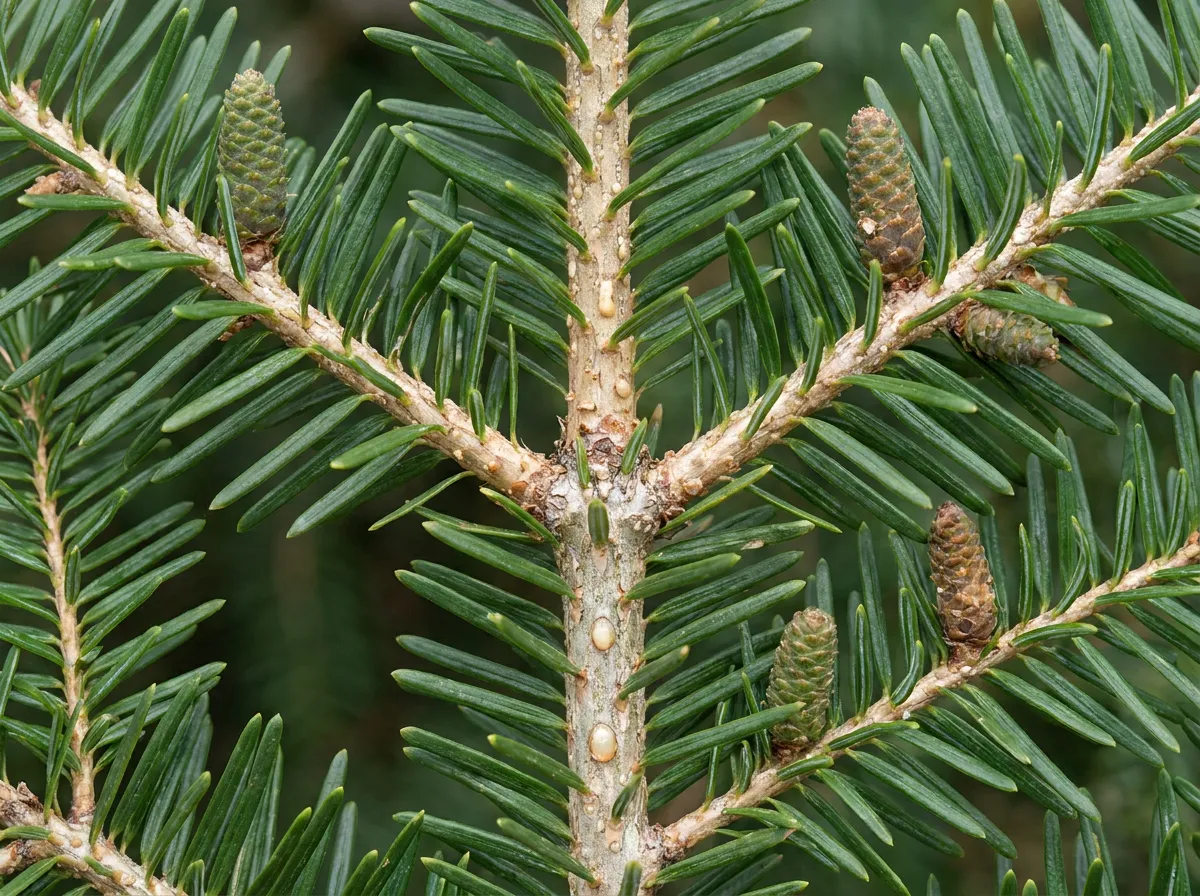
Abies balsamea is the classic Christmas tree of the northern forest, with flat, glossy, blunt-tipped needles that smell sweet and resinous when crushed.
We use the young needles together with the fine twigs they sit on. Older wood contributes little and would only dilute the charge.
Boughs are cut in the cold months, when the tree is dormant and the needles hold their oil most tightly, and the material is a by-product of the same trimming that supplies the seasonal greenery trade.
We distil ourselves, so the interval between the cut and the charge is something we control rather than something we hope about.
Boughs are packed whole and steam is passed through until the needles are spent. The oil comes off clear and smells crisp, green and sweetly resinous, softer and jammier than pine.
A charge is finished when the needles are, and that is the only measure we work to.
The distillation date, the bottling date and a lot number, with the earlier date being the one that matters for a conifer.
Every size amber, because bright conifer notes fade fastest in the light.
Pure Abies balsamea, undiluted, with no spruce or pine blended through it.
No medical claims here. Fir needle is a bright, clean conifer aromatic and we will describe it as exactly that.
It needs a base oil before any skin contact, and one small trial area before wider use. Oxidised conifer oils are more likely to irritate than fresh ones, which is the real argument for buying a size you will finish.
Keep it closed, cool and out of the light, and let the still date tell you where the oil is in its life. Anything that fails to read as balsamea stays in the drum, and we would sooner have empty shelves than a substituted bottle.
True of every fir batch we fill.
Taken while the tree is dormant and the needles hold their oil.
Bought in bulk from growers, from the same trimming that supplies seasonal greenery.
Boughs into our own still, so the delay between cut and charge stays short.
Outside laboratory analysis of bornyl acetate on every batch.
One species only, at full strength, however tight a season gets.
Sample bottles through to bulk, all off the same run.
Winter-cut boreal boughs, distilled close to the harvest in our own still, with bornyl acetate confirmed by an independent laboratory.
Check the still date first.
Shop Fir Needle Oil