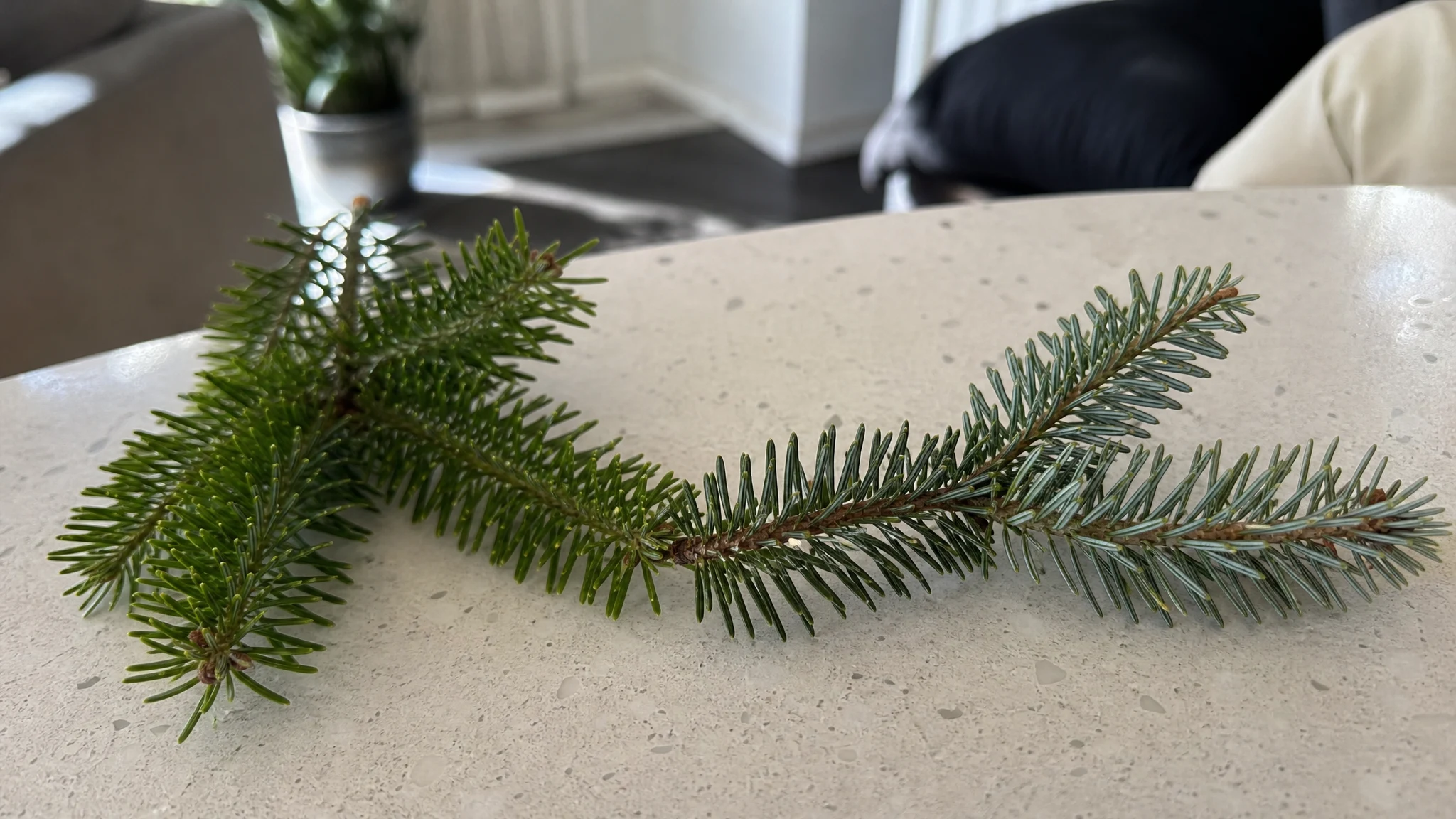
How to Compare Fir Oil Prices Fairly
The number printed under a fir oil listing is only the start of the comparison. A bottle that looks cheap may hold less oil than you think, be a different tree, or come with nothing to back up its name. We keep our own prices on the shop page, where they stay current, and this guide is about the three adjustments that turn any two listings into a fair comparison.

Fir Needle Essential Oil
Our own Fir Needle Essential Oil, in sizes from 0.5 oz to bulk.
From $10.99
Shop Now →Adjustment one: turn ounces into grams
"Oz" can mean fluid ounces or ounces by weight, and for an oil lighter than water the two are not the same. The Certificate of Analysis we publish for one batch gives a relative density of 0.924, so a fluid ounce of that oil weighs about 27.3 g, while a weight ounce is 28.35 g. That is a gap of about 3.7 percent, small but free to settle by reading the fine print or asking. Once you know, divide the price by grams. A 4 oz bottle holds roughly 109 g by volume reading, and a 16 oz bottle about 437 g, and those grams are what you carry into any batch calculation. Our per-batch arithmetic picks up there.
Adjustment two: check it is the same tree
Common names stretch. Douglas fir, for one, is not a fir at all: it belongs to the genus Pseudotsuga and, as its species page puts it, is "not a true fir". Even among true firs the scent chemistry varies. Silver fir needles in an Italian study led with limonene and alpha-pinene (Garzoli et al., 2021), while Siberian fir from East Kazakhstan led with bornyl acetate (Ayupova et al., 2025). Different labs and methods, so not a scorecard, but enough to say that a price which ignores the name compares unlike things.
We sell one fir needle oil, and the certificate we publish for one batch names Abies balsamea. If you are weighing balsam against other trees, our three-way comparison goes through them.
Adjustment three: ask what comes with the bottle
Documents cost a seller something to produce, so they are a fair thing to weigh against price. Roughly from most to least informative: a GC/MS report for the lot, a certificate of physical constants, and nothing. The certificate we publish is the middle kind, with density 0.924 and refractive index 1.468 inside the stated windows of 0.888 to 0.958 and 1.445 to 1.488. If you need a GC/MS report, a safety data sheet or an IFRA statement, ask us in writing through the wholesale page or the contact page before you order. We would rather you ask first, and our quality checklist shows how to read whatever comes back.
Price per project is the number that matters
For most uses the oil is a small slice of the cost, so work out how much your project needs. A 30 ml skin oil at 1 percent takes 0.3 ml, under a third of a gram. An 8 oz soy candle with 227 g of wax at an example load of 8 percent takes about 18 g. A 1,000 g soap batch at 3 percent takes 30 g. Multiply the grams by your price per gram and you have a real figure. The pattern is that skin products barely notice the bottle price, while candles and soap feel it, and the loads in these examples are arithmetic, not recommendations. Your wax or base data sheet and the IFRA reading notes set the real ceilings.
When the smallest bottle wins
If you are trying a recipe for the first time, a modest bottle of any oil with a named species is enough, and paying for more buys nothing. If you plan to sell what you make, paperwork starts to matter as much as price. And if the scent you want belongs to another fir, that is an honest reason to buy from someone who sells it. For a first order, picking a size by project follows the same grams logic.
Compare grams, name and paper, and the cheapest listing and the best one are often easier to tell apart than you expect.
Fir Needle Essential Oil
Fir Needle Essential Oil from our own shop, in sizes from 0.5 oz to bulk.
From $10.99
Shop Now →Sources & Further Reading
- Liquid and Vapor Phase of Four Conifer-Derived Essential Oils: Comparison of Chemical Compositions and Antimicrobial and Antioxidant Properties (Garzoli et al., Pharmaceuticals, 2021)
- Comparative Phytochemical Profiling of Essential Oils from Selected Abies Species and Analysis of Their Antifungal and Antiradical Activity (Ayupova et al., Pharmaceutics, 2025)
- Douglas fir - Wikipedia