From Canoe Pitch to Christmas Tree: Balsam Fir's Story
Few trees have been put to work as many ways as balsam fir. People have slept on its boughs, sealed canoes with its resin, mounted specimens under microscopes with it and hung ornaments from it. The one thing the records say little about is the oil, and that is part of what makes the story fun.

Fir Needle Essential Oil
Our own Fir Needle Essential Oil, in sizes from 0.5 oz to bulk.
From $10.99
Shop Now →Two kinds of balsam
First, a word on the word. The US Forest Service describes balsam fir's oleoresin as confined to blisters in the bark, and says it has been used for slide mounting and cements. That sticky resin is a different material from the oil distilled from needles. Old accounts of "balsam" nearly always mean the resin, and we keep the two apart; our comparison of fir needle oil, absolute and Canada balsam does the same for buyers.
A tree you could live with
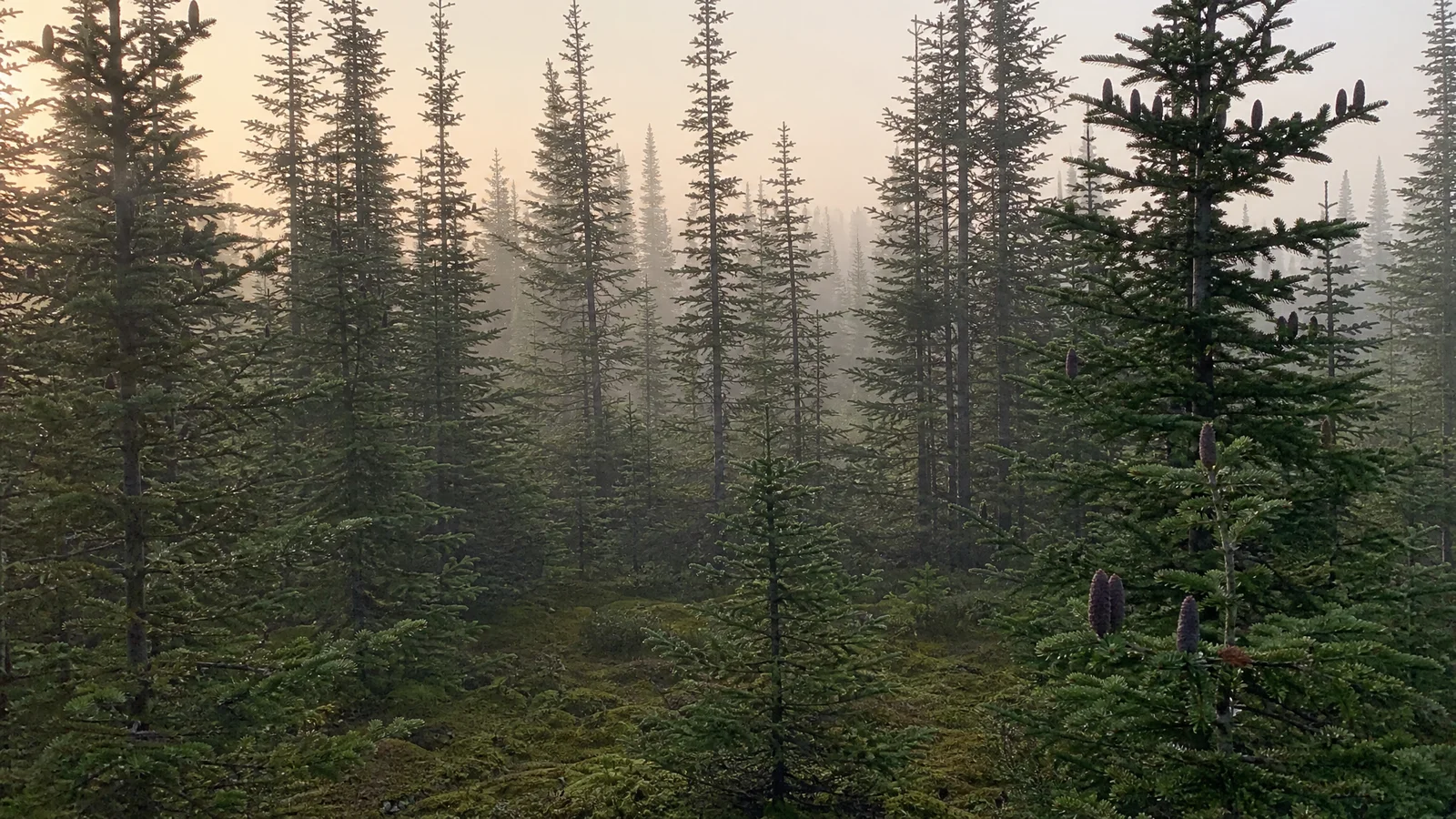
The tree itself is a northern one, reaching 12 to 18 m at maturity, ranging from Newfoundland and Labrador west to northern Minnesota and through the Northeast. The records collected from several nations of that region (as summarised on Wikipedia from named ethnographic sources, which we have not read in the original) are wonderfully practical. Ojibwe cooks boiled the resin twice and mixed it with fat to make a canoe pitch. The Wolastoqiyik used pitch on canoe seams and needles and branches for bedding. Mi'kmaq families made beds of boughs, the Atikamekw laid them as tent floors, and the Abenaki stuffed needles into pillows.
What stands out is how ordinary the uses were: waterproofing, bedding, floors. Anyone sleeping on cut boughs would notice the aroma, but in most of these records it comes along with the use rather than driving it. That is our reading, not a historian's finding, and it is a good reminder that a bough on a tent floor and a bottle of distilled oil are very different things.
Under the microscope
The resin had a second career in science. Molten Canada balsam was being used to mount microscope slides from about 1830, a dissolved form arrived in 1843 and became popular in the 1850s, and its refractive index of 1.52 matched crown glass closely enough to serve as an optical adhesive until it was phased out during World War II. The tree's sticky blisters helped people see small things clearly for about a century.
The Christmas tree years
The Forest Service calls balsam fir a favourite Christmas tree for more than 400 years, and says wreath-making is a major holiday business in places because of needle retention, colour and fragrance. Wikipedia reports it was the species picked for the US Capitol Christmas Tree six times between 1964 and 2019, and calls it the most fragrant of the Christmas tree species.
That is where our oil fits. The boughs behind it are cut in the cold months, as a by-product of the same trimming that supplies the seasonal greenery trade, and come from the North American boreal forest. We could not find a dated record of when people first distilled balsam fir needles, so the story of the oil starts later than the story of the tree. Put simply, the oil is a newer chapter in an old relationship. For a closer look at the forest side, see our sustainability post, and for the chemistry, the bornyl acetate post.
A forest with its own story
The tree's own history includes bad years. It is the preferred host of the eastern spruce budworm, and a 1957 Quebec outbreak killed over 75% of balsam fir in some stands, according to the work Wikipedia cites. Pests and weather have shaped the forest at least as much as people have.
So when a listing says a fir oil has been used "for centuries", it is worth asking which material and which records. A bough, a pitch and a bottle share a tree, not a history, and if you like the scent of the oil, the nicest way to connect it to the tradition is to bring in a fresh bough, as in our Christmas tree scent guide.
Fir Needle Essential Oil
Fir Needle Essential Oil from our own shop, in sizes from 0.5 oz to bulk.
From $10.99
Shop Now →