Does Fir Oil Stain? Getting It Out of Fabric
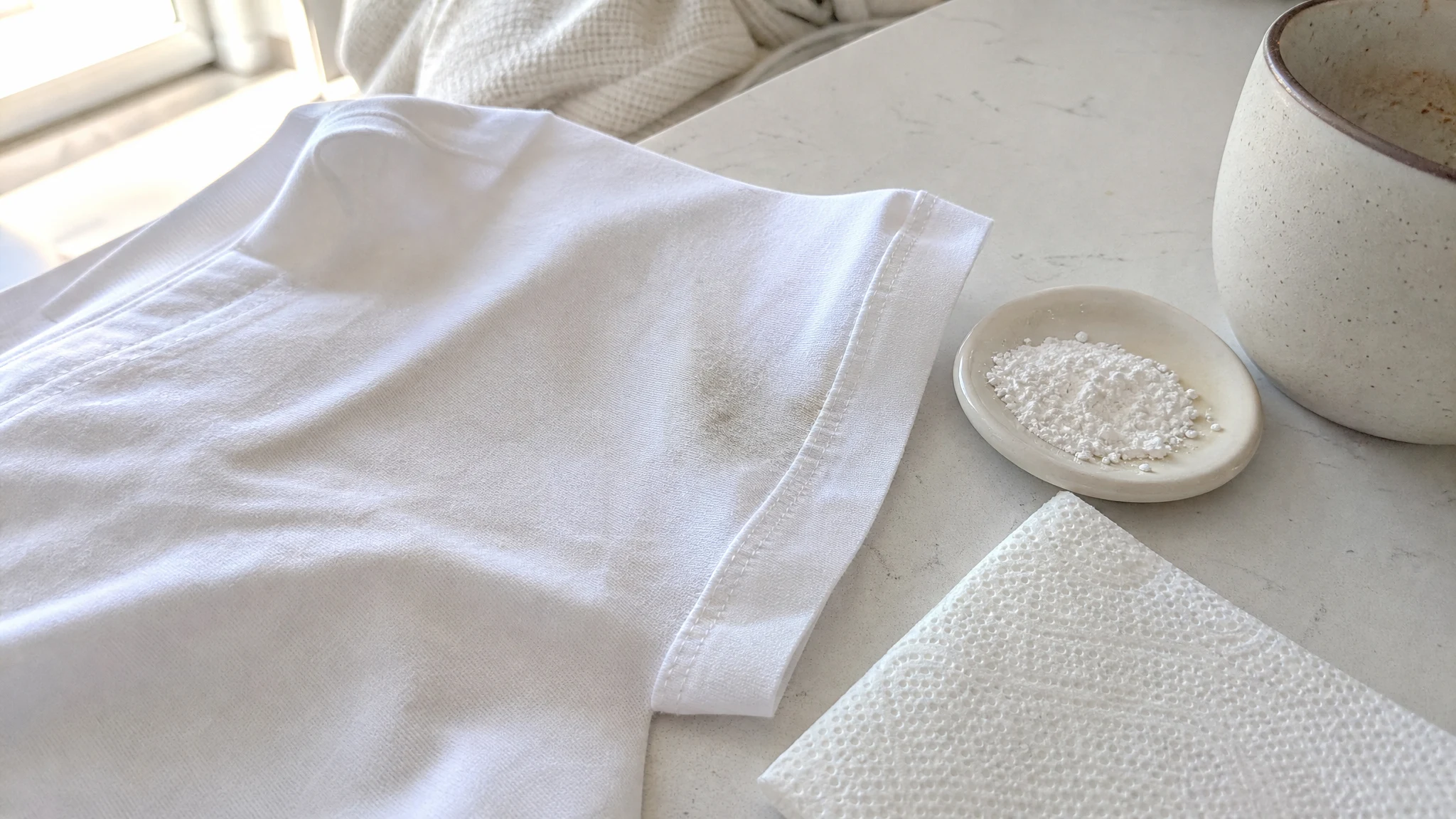
A single drop of fir oil that lands on a cotton sleeve does not evaporate and vanish the way water does. The aroma fades, but the oil that carried it stays behind as a faint, slightly translucent mark, the same kind you would get from a drop of cooking oil. The good news is that it responds to the same treatment, and the sooner you start, the easier it is.

Fir Needle Essential Oil
Our own Fir Needle Essential Oil, in sizes from 0.5 oz to bulk.
From $10.99
Shop Now →Think of it as any other oil
Essential oils are oils, so fabric treats them like grease. Cornell Cooperative Extension's stain guide, which comes from Cornell University laboratory work, groups fats, oils and waxes together as "hydrophobic" stains, meaning water alone will not lift them. Its list does not name essential oils specifically, so the closest category is the one for oils and fats. It also notes that fresh stains are easier to remove than old ones, which is the best reason to deal with a spill the moment it happens rather than at the end of the day.
Colour is the other variable. Fir oil is not a dye, but an oil with some tint can leave a faint shadow behind. The batch on our published Certificate of Analysis is checked against a standard of "brown liquid", so on very light fabrics it is reasonable to expect a pale cast along with the grease mark. Treat it promptly rather than assuming it will not mark.
A washable fabric, step by step
- Blot, do not rub. Press a clean paper towel or cloth onto the spot to lift the surface oil. Rubbing pushes it deeper into the weave.
- Cover it with an absorbent powder. Cornstarch, baking soda or talcum powder, left on for a quarter of an hour or so, gives the oil something to cling to besides the fibres. This is a common household step rather than one either guide below prescribes. Brush it off.
- Work in dish detergent. A drop of liquid dishwashing detergent is made to cut grease. Cornell's procedure includes a detergent solution at this stage. Rub it gently into the spot with your fingers.
- Wash as the care label allows. The University of Georgia's textile guidance for oil-based stains is to dampen the spot, rub in detergent and launder in hot water with plenty of detergent, which suits fabrics that can take it. Delicate items need cooler water, so let the care label decide.
- Check before the dryer. If a mark remains, Georgia's guidance is to air-dry and treat again with detergent. Our reasoning is that dryer heat could set whatever oil is left, so it is worth checking the spot in daylight while the garment is still damp.
When to hand it to a professional
Cornell's procedure for non-washable fabrics starts with dry-cleaning solvent and absorbent pads, which is a job for a dry cleaner. That applies to silk, wool, leather, suede and anything labelled dry-clean only. Take it in quickly, tell them it is an essential oil, and do not apply detergent first, because water can leave its own ring on delicate fabrics. Georgia says to read the care label first, and both guides say to test any cleaner on a hidden area, such as an inside seam, before touching the visible part.
The same guides warn that chlorine bleach should not go near wool, silk or spandex, so reaching for bleach as a last resort is a way to turn a small mark into a big one.
Wood, tile and other surfaces
Hard, sealed surfaces are the easy case. Wipe up what you can with a dry cloth, then use a soft cloth with a little dish detergent and warm water, and dry it. Unfinished wood, stone and some painted or lacquered surfaces can absorb oil, so we would use only the cloth and a very light touch, and check the manufacturer's care guidance before trying anything stronger. If a good piece of furniture has taken the oil, a furniture restorer is the person to ask.
Keeping it off in the first place
Most spills happen at the pouring moment, so work over a tray or a folded towel, keep the cap threaded tight between uses, and give a wooden shelf a small dish to sit on. If you are making something with it, like a cleaning spray or a room spray, test the finished spray on a hidden patch of fabric or a table edge first, because a spray that has been mixed to stay together can still leave an oily film. Diluted oil on skin is a smaller matter; our dilution guide shows how little actually goes on, and our usage rates guide turns percentages into drops so you can see how much is in a mixture before it goes near a sleeve.
A stain is rarely the end of a favourite shirt. Blot it, powder it, soap it, and look at it in daylight before you decide it is gone.
Fir Needle Essential Oil
Fir Needle Essential Oil from our own shop, in sizes from 0.5 oz to bulk.
From $10.99
Shop Now →Sources & Further Reading
- Removing Stains at Home, Cornell Cooperative Extension
- Remove Stains From Oil-Based Foods, University of Georgia Extension, Textiles