Fir vs Cedarwood Oil: Needle or Wood?
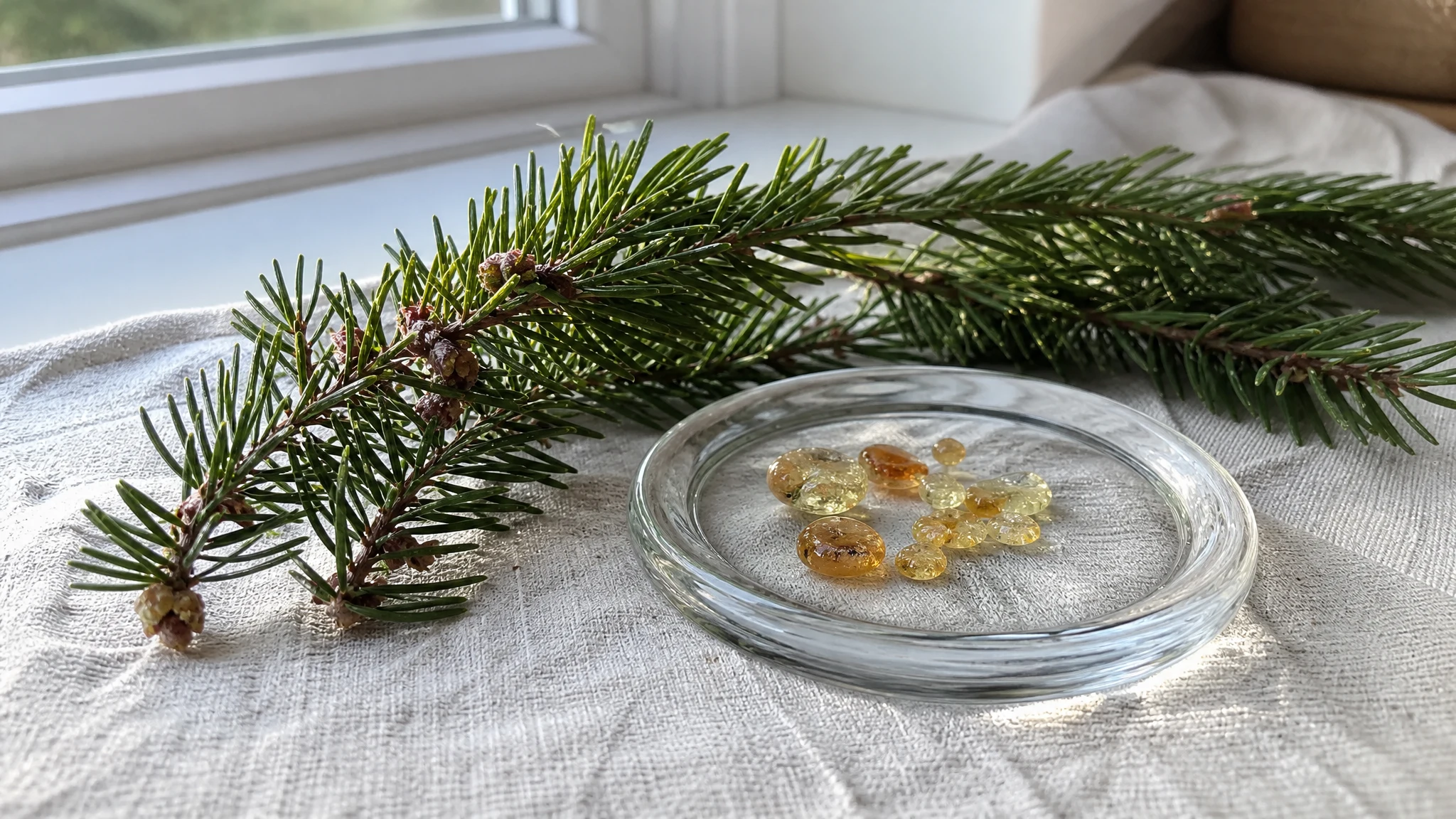
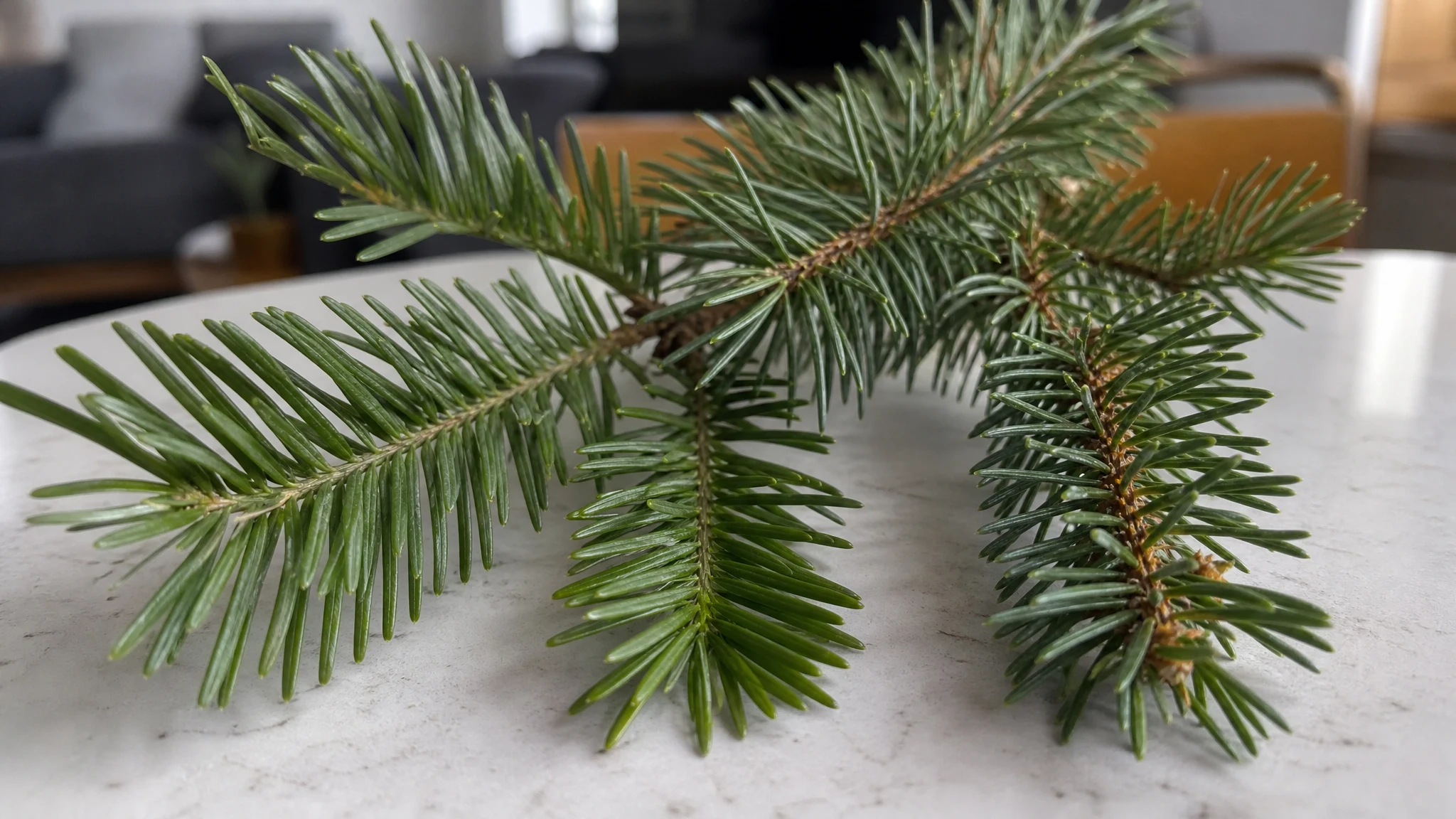
Fir comes from a tree's needles and fine twigs; cedarwood comes from its wood. That one fact explains most of what separates the two when you open the bottles: one smells like a cut bough and the other like the inside of a pencil box. They are close cousins in the woody family, which is why they are so often paired, and also why people sometimes reach for one when they want the other.

Fir Needle Essential Oil
Our own Fir Needle Essential Oil, in sizes from 0.5 oz to bulk.
From $10.99
Shop Now →Where each one starts
Our product pages describe our fir as steam distilled from needles and fine twigs, and the batch on our published Certificate of Analysis names Abies balsamea, balsam fir. Cedarwood is a different story. Most commercial cedarwood oils are made by distilling wood, and, as the reference page on cedar oil points out, they come mainly from junipers and cypresses rather than true cedars. Eastern red cedar (Juniperus virginiana) and Texas cedar (Juniperus ashei) are common sources, while the true cedars (Atlas and Himalayan, Cedrus) supply a different style of oil. So the word "cedarwood" on a bottle can mean several things, and the Latin name tells you which.
Why they smell different
Fir's backbone is a group of light, bright molecules, the pinenes and carene, with bornyl acetate adding a woody, slightly cooling sweetness. A 2026 analysis of commercial cedarwood oils reads very differently. In 56 Juniperus virginiana samples the main constituents averaged about 32% alpha-cedrene, 19% thujopsene and 13% cedrol, a set of heavier woody compounds. The true cedars are dominated by himachalenes, around 40% beta-himachalene in the Atlas oils the authors studied. These are chemistry notes, not claims about effect, but they explain the feel: fir lifts and sparkles, and cedarwood sits low, dry and steady.
Practically, that makes fir the better choice when you want a room to smell like a winter walk. Cedarwood is the better choice when you want the warmth of a wardrobe or a pencil shaving. Reasoning from that, cedarwood can also act as an anchor beneath a fir blend, holding it in place a little longer.
Pairing them
We list cedarwood among the oils that blend well with ours, and the pairing earns its place. As a starting suggestion, not a tested recipe, try 3 drops of fir to 1 of cedarwood in a diffuser: that gives you a forest on top of a wooden floor and keeps the base from taking over. For a rounder, warmer blend, go to 2 and 2. Our diffuser drops guide can help you size the total, and what to pair with fir oil has more partners to try.
For soap, one maker's chart lists fir needle at 13 g per pound of oils (about 3%) and cedarwood at 18 g (about 4%), so that maker gives cedarwood a slightly heavier hand; our fir soap blends and cold process fir soap guides show how to work out a rate for your own recipe. For skin products, we recommend keeping both oils at the same careful 0.5% to 2% in a carrier, and checking the IFRA standards for the finished product you are making.
Which one to buy first
If the scent you imagine is fresh evergreen, start with fir. If it is the dry, wooden warmth of a cedar chest, start with a cedarwood from a craft supply shop and look at the species on the bottle, because Texas, Virginia and Atlas oils are not interchangeable. We sell only the fir, so we cannot supply the cedarwood, but we would encourage you to smell both side by side before you commit to a blend; one sniff settles the question quicker than any description can.
The best answer, often, is both. Fir gives the room its trees, cedarwood gives it floor and walls.
Fir Needle Essential Oil
Fir Needle Essential Oil from our own shop, in sizes from 0.5 oz to bulk.
From $10.99
Shop Now →Sources & Further Reading
- Cedarwood Oils: The Wood Essential Oil Compositions from Trees Known as "Cedar", Setzer and Satyal, Plants, 2026
- 30 Essential Oils for Soapmaking + Printable Chart (cold process), The Nerdy Farm Wife